Productivity Hacks That Help You Focus and Get More Done
Fact-Checked — This article cites trusted psychological and public health sources. Last reviewed: May 2026.
BlockerPlus Team · May 7, 2026 · 8 min read
You do not need a complicated system to become productive. You need fewer distractions, clearer priorities, and a routine you can actually repeat.
Productivity is not about squeezing every second out of your day. It is about using your best attention on work that matters, then leaving space for rest.
The goal is simple: help you focus, finish important work, and feel less stressed.
TL;DR: What Should You Do First?
- Pick three important tasks for today.
- Block your biggest digital distraction before work starts.
- Use one deep work block for your hardest task.
- Review your day for five minutes before bed.
If you want one quick win, install BlockerPlus and protect your first focus block.
Why Productivity Matters More Than Ever
Here’s the thing: your attention is under constant attack. Notifications, short videos, messages, and endless feeds can split your day into tiny fragments.
Research from the American Psychological Association explains that task switching can reduce efficiency because your brain pays a cost each time it changes direction. That is why focus improvement tips matter so much in modern life.
When you protect your attention, you protect your time, energy, and peace of mind.
| Benefit | How it helps your day |
|---|---|
| Better focus | You give full attention to one meaningful task. |
| Lower stress | You stop carrying a huge mental list all day. |
| More free time | You finish faster because your work is less scattered. |
| Higher confidence | You see proof that you can follow through. |
Pro Tip: If your biggest productivity problem is distraction, start with your environment. A tool like BlockerPlus can remove temptation before willpower gets tired.
36 Easy Productivity Hacks to Increase Focus and Efficiency
The good news? You do not need all 36 at once. Choose the three that match your current problem.
If social media keeps pulling you away, start with blocking and deep work. If your schedule feels messy, start with planning and time blocking.
Use these productivity hacks like a menu, not a rulebook.
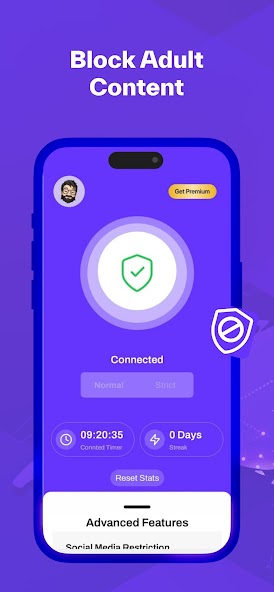
BlockerPlusBlock distracting websites and apps before they break your focus.
1. Start With Clear Goals
If your goal is fuzzy, your day gets fuzzy too. Write exactly what you want to finish today, then make the first step tiny enough to start now.
Clear goals turn motivation into action.
2. Use the 80/20 Rule
A few tasks create most of your results. Find the small actions that move your work forward and do those before low-value busywork.
Do the work that creates the biggest result first.
3. Eat the Frog First
Your hardest task becomes heavier the longer you avoid it. Start with it before messages, social media, or random tabs steal your attention.
Win the day early by doing the task you want to avoid.
4. Time Blocking
Give your important work a reserved place on your calendar. When the block starts, your only job is to protect that time.
A calendar block is a boundary for your focus.
5. Timeboxing
Set a fixed time limit before you begin. This keeps simple tasks from expanding into your whole afternoon.
A timebox helps you finish instead of endlessly polish.
6. Two-Minute Rule
If something takes less than two minutes, do it right away. Use this for tiny actions, not as an excuse to avoid deep work.
Small tasks should not become mental clutter.
7. Deep Work Sessions
Choose one demanding task and work on it for 60 to 90 minutes. Close extra tabs and keep your phone out of reach.
Deep work gives your best attention to your best work.
8. Remove Digital Distractions
Notifications are not harmless. They break your flow and make your brain restart again and again. Use BlockerPlus when willpower is not enough.
Your focus improves when distractions are blocked before they reach you.
9. Avoid Multitasking
Multitasking feels productive, but switching costs drain time and quality. Do one thing until the next clear stopping point.
One task at a time is usually faster.
10. Plan Your Day the Night Before
Decide tomorrow’s first task before you sleep. Your morning becomes easier because you do not start with decision fatigue.
A planned morning starts with less stress.
11. Limit Your To-Do List
A giant list creates pressure. Pick three must-finish tasks, then treat the rest as optional.
A shorter list helps you complete more.
12. Build a Morning Routine
Your morning should prepare your attention, not scatter it. Keep it simple with water, movement, and a quick look at your priorities.
A calm morning protects the rest of your day.
13. Avoid Checking Your Phone Early
Your phone puts other people’s priorities into your head. Give yourself the first 30 minutes before feeds and messages.
Own your morning before your phone does.
14. Work According to Your Energy
Notice when your brain is sharpest. Put hard work there and save routine work for lower-energy hours.
Energy management is time management.
15. Take Breaks the Right Way
A real break should restore you. Stand up, breathe, walk, or stretch instead of scrolling into another dopamine loop.
Better breaks make better work possible.
16. Batch Similar Tasks
Group similar work together. Answer messages in one batch, create content in one batch, and clean up admin work in one batch.
Batching reduces constant context switching.
17. Use Deadlines
A task without a deadline can drift forever. Give it a realistic finish line and make the next action obvious.
Deadlines create useful pressure.
18. Track Your Time
Track one normal day honestly. You will quickly see where your time leaks into distractions, delays, and low-value work.
Awareness is the first step to better control.
Warning: Do not turn productivity into another way to pressure yourself. Your routine should help you feel clearer, not more guilty.
19. Keep Your Workspace Clean
Your environment sends cues to your brain. A cleaner desk makes it easier to start and harder to wander.
A clean space supports a clean focus.
20. Reduce Decision Fatigue
Repeat simple choices. Use routines, templates, and default plans so your brain has energy left for important work.
Systems save mental energy.
21. Say No to Unnecessary Work
Every yes has a cost. Protect your priorities by saying no to work that does not fit your goals.
Saying no is a productivity skill.
22. Start Small
Do not wait for the perfect setup. Start with two minutes, one paragraph, or one tiny step.
Momentum often appears after you begin.
23. Focus on Progress, Not Perfection
Perfection can hide procrastination. Improve the work after you create a first usable version.
Done and improved beats perfect and unfinished.
24. Use the One Task Rule
Choose one task and make it the only thing open. This rule works because it removes negotiation.
One open task means one clear target.
25. Build Systems
A system is a repeatable way to get results. It beats motivation because it still works on average days.
Systems make productivity less emotional.
26. Use Visual Tracking
Track habits where you can see them. A calendar, checklist, or streak board turns progress into something visible.
Visible progress keeps you engaged.
27. Schedule Distraction Time
Do not pretend you will never want distractions. Schedule them so they stop invading work blocks.
Planned distraction is easier to control.
28. Reward Yourself
Small rewards teach your brain that focused work is worth repeating. Keep rewards healthy and intentional.
Rewards help habits stick.
29. Reflect Daily
Spend five minutes asking what worked, what distracted you, and what to improve tomorrow.
Reflection turns experience into a better routine.
30. Use the 3 Task Rule
Pick three tasks that would make today successful. Finish those before chasing extras.
Three priorities beat thirty wishes.
31. Avoid Low-Value Tasks
Some tasks feel productive because they are easy. Ask whether each task truly moves your goal forward.
Busy is not the same as effective.
32. Control Social Media Usage
Social platforms are built to keep you scrolling. Use BlockerPlus to set limits when focus matters.
Control social media before it controls your schedule.
33. Work With Clear Priorities
Rank your tasks by impact, urgency, and energy needed. Then start with the highest-value match.
Priorities remove guesswork.
34. Stay Physically Active
Movement improves energy and mood. A short walk can reset your brain when focus starts slipping.
Your body affects your productivity.
35. Keep Learning Productivity
Try one new method at a time. Keep what works for your real life and ignore what feels complicated.
The best method is the one you actually use.
36. Stay Consistent
Consistency beats intensity. A simple routine repeated daily will do more than a perfect plan used once.
Small daily wins create long-term efficiency.
How to Choose the Right Productivity Hacks for You
Here’s what most people don’t realize: the best productivity routine depends on your biggest bottleneck.
If your problem is distraction, read the BlockerPlus guides on screen time and dopamine, how porn affects your brain, and how to block adult websites on Android. If you need stronger blocking tools, compare the best porn blockers for Android.
Choose one method that solves today’s real problem.
Which method fits you best?
| Your problem | Best first hack | Why it works |
|---|---|---|
| You scroll too much | Block distractions with BlockerPlus | It removes the trigger before you negotiate with yourself. |
| You delay hard work | Eat the frog first | It gives you an early win and lowers stress. |
| Your day feels chaotic | Plan the night before | You wake up with a clear first step. |
| You switch tasks too often | Use the one task rule | You stop paying the cost of constant context switching. |
Start small, block the obvious distractions, and repeat the routine long enough to trust it.
Conclusion
Productivity gets easier when your day has fewer traps. You need clear goals, protected focus time, useful breaks, and a simple review habit.
BlockerPlus helps with the part many people struggle with most: digital distraction. When distracting apps and sites are blocked, your best intentions have a better chance.
Do not chase a perfect productivity routine. Build one repeatable day, then repeat it tomorrow.
If you are also building better digital habits, you may like the 90-day challenge guide and the stop watching porn guide.
Ready to protect your focus?Use BlockerPlus to block distracting content during work, study, and recovery routines.
FAQs
How many productivity hacks should I use at once?
Start with two or three. Use them for a week before adding more, because too many changes at once can become another distraction.
How long does it take to see productivity results?
You can feel small wins in a few days. Bigger results usually appear after two to four weeks of consistent practice.
What is the biggest productivity mistake people make?
The biggest mistake is trying to do everything at once. Clear priorities and distraction control matter more than a huge to-do list.
Are productivity hacks useful for students and professionals?
Yes. Students, professionals, creators, and founders can all use these habits to improve focus and work with less stress.
How can I stay consistent with productivity habits?
Make the habit small, track it visually, and connect it to something you already do every day.
Is working more hours equal to higher productivity?
No. More hours can help sometimes, but focus, recovery, and clear priorities usually matter more.
What should I do if I lose focus frequently?
Find your biggest distraction, remove it from your work block, and use shorter focus sessions until your attention gets stronger.
Are productivity tools necessary for better results?
Tools are not required, but they help when your environment is full of distractions. BlockerPlus is useful when websites or apps keep pulling you away.
How do I choose the best productivity method for myself?
Choose the method that solves your current problem. If distractions are the issue, start with blocking and deep work. If chaos is the issue, start with planning.
Can productivity habits improve personal life?
Yes. Better productivity creates more space for rest, health, relationships, and learning.
📚 References & Sources
- American Psychological Association — Multitasking: Switching Costs — Explains why task switching can reduce efficiency.
- NIH / NCBI — Physical Activity and Cognitive Function — Reviews links between movement and cognitive performance.
- SAMHSA — Mental Health Information — Trusted public health information about mental wellness and support.
Disclaimer: This content is for informational purposes only and does not constitute medical or psychological advice. If you're struggling with addiction, please consult a licensed healthcare professional. BlockerPlus is a digital tool, not a substitute for professional treatment.
BlockerPlus blocks content, tracks your streak, and keeps you accountable — free on Android.
Download Free on Android