
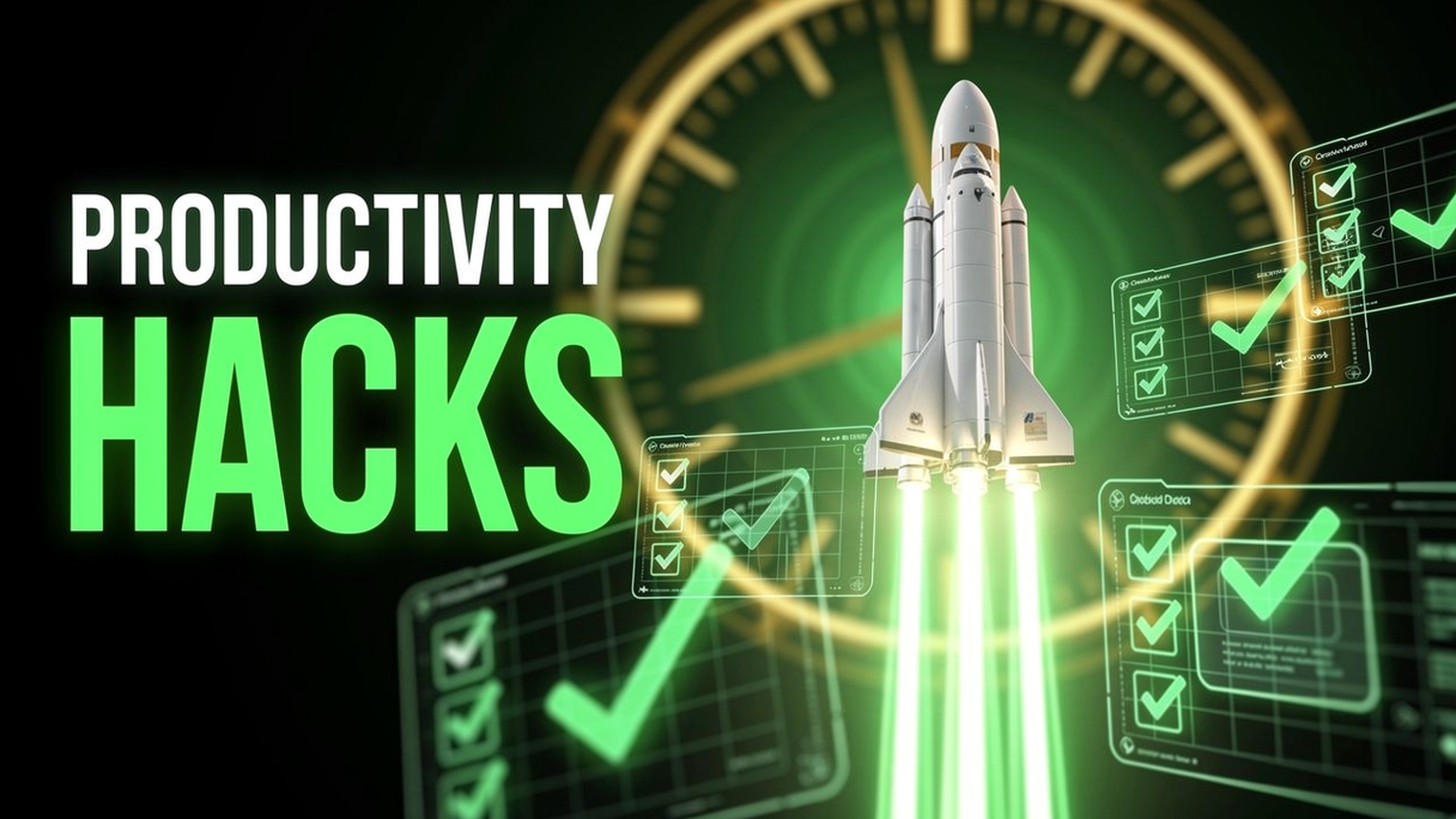
Productivity is not about doing more work. It is about doing the right work in less time with better focus. Many people think productivity comes from working longer hours, but the truth is the opposite: the most productive people are those who manage their time, energy, and attention wisely.
In today’s world, distractions are everywhere. Phones, notifications, social media, and endless content can easily break your focus. This is why productivity is not just a skill anymore; it is a daily discipline that protects your goals from distraction.
In this guide, you will learn practical productivity hacks that you can start using immediately. These methods are simple, realistic, and designed to help you improve focus, manage time better, reduce distractions, and build a productivity routine that actually fits your life.
Why Productivity Matters More Than Ever
Before jumping into productivity tips, it is important to understand why productivity matters in daily life. Time is limited, demands are high, and attention is constantly being pulled by apps, messages, and responsibilities. When you use your time wisely, you gain more control over your work and your personal life.
| Benefit | What it changes in daily life |
|---|---|
| Faster completion | You finish important tasks without dragging them across the whole day. |
| Lower stress | You feel less pressure because your priorities are clear and organized. |
| Better work quality | You give full attention to meaningful tasks instead of rushing through them. |
| More personal time | You create space for health, family, learning, and rest. |
| Stronger habits | You repeat useful routines until productivity becomes easier and more natural. |
Being productive also gives you a sense of clarity. Instead of feeling busy all day, you actually make progress on things that matter. Productivity affects your health, relationships, confidence, and overall lifestyle because good time management creates space for both growth and rest.
36 Easy Productivity Hacks to Increase Focus and Efficiency
The following productivity hacks are practical enough to use today. You do not need to apply all of them at once. Start with the ones that solve your biggest problem, whether that is poor focus, weak time management, digital distraction, or inconsistent routines.
1. Start With Clear Goals
Lack of clarity is one of the biggest reasons people feel unproductive. When your goals are vague, you spend valuable attention deciding what to do next instead of actually doing meaningful work.
What you can do:
- Set clear daily, weekly, and monthly goals.
- Write your goals in simple language so there is no confusion.
- Break big projects into smaller steps that can be finished one by one.
2. Use the 80/20 Rule
Not every task produces the same value. The 80/20 rule reminds you that a small number of high-impact actions often create most of your results.
What you can do:
- Identify the tasks that create the biggest outcomes.
- Do important work before low-value activity.
- Review your task list and remove work that does not move you forward.
3. Eat the Frog First
Difficult tasks are easy to delay, but postponing them creates stress throughout the day. Completing the hardest task first gives you momentum and confidence.
What you can do:
- Start your day with the task you are most likely to avoid.
- Work on it before checking messages or social media.
- Celebrate the early win and use that energy for the rest of the day.
4. Time Blocking
Working without structure makes your day reactive. Time blocking gives every important task a place on your calendar so your attention has a clear direction.
What you can do:
- Divide your day into focused time slots.
- Assign one specific task or theme to each block.
- Protect the block from meetings, notifications, and unrelated work.
5. Timeboxing
Tasks expand when there is no limit. Timeboxing helps you decide how long a task deserves before you begin, which prevents overthinking and perfectionism.
What you can do:
- Set a fixed start and end time for a task.
- Work with full focus until the timebox ends.
- Move forward instead of endlessly polishing low-impact details.
6. Follow the Two-Minute Rule
Small tasks create mental clutter when they pile up. The two-minute rule keeps your task list clean by handling quick actions immediately.
What you can do:
- If a task takes less than two minutes, do it now.
- Avoid postponing tiny actions such as replying to a simple message.
- Use this rule for small tasks, not as an excuse to avoid deep work.
7. Deep Work Sessions
Deep work is focused, distraction-free effort on cognitively demanding tasks. It helps you produce better results in less time because your attention is not constantly switching.
What you can do:
- Schedule 60 to 90 minutes for important work.
- Keep only one task open during the session.
- Remove notifications, tabs, and apps that can interrupt you.
8. Remove Digital Distractions
Digital distractions are one of the biggest barriers to modern productivity. Notifications, social feeds, and distracting websites can break your focus before you notice it.
What you can do:
- Turn off non-essential notifications.
- Block distracting websites and apps during work blocks.
- Use tools such as BlockerPlus when you need stronger boundaries around distracting content.
9. Avoid Multitasking
Multitasking feels efficient, but it usually lowers the quality of your attention. Switching between tasks forces your brain to repeatedly restart, which slows progress and increases mistakes.
What you can do:
- Work on one task at a time.
- Finish a meaningful step before switching.
- Keep unrelated tabs and apps closed while working.
10. Plan Your Day the Night Before
Morning decisions can waste energy. Planning your day the night before gives you clarity as soon as you start working.
What you can do:
- List the next day’s most important tasks.
- Choose your first task before going to sleep.
- Prepare any files, notes, or materials you will need.
11. Limit Your To-Do List
A long to-do list can create pressure instead of progress. A shorter list helps you focus on completion rather than constant task collecting.
What you can do:
- Keep five to seven realistic tasks for the day.
- Separate essential work from optional work.
- Move unfinished low-priority tasks instead of carrying guilt.
12. Build a Morning Routine
Your morning sets the tone for your attention and energy. A simple routine helps you begin the day with control instead of rushing into distractions.
What you can do:
- Wake up at a consistent time when possible.
- Do a short activity such as stretching, walking, or journaling.
- Review your top priorities before opening social apps.
13. Avoid Checking Your Phone Early
Checking your phone early puts other people’s priorities into your mind before your own. This habit can reduce focus for the rest of the morning.
What you can do:
- Avoid your phone for the first 30 minutes after waking.
- Use an alarm clock instead of relying on your phone when possible.
- Start with a calm routine before consuming messages or feeds.
14. Work According to Your Energy
Productivity depends on energy as much as time. When you match demanding work with your best energy hours, your efficiency improves naturally.
What you can do:
- Identify when you feel most alert during the day.
- Schedule deep or creative work during that window.
- Save lighter tasks for lower-energy periods.
15. Take Breaks the Right Way
Working continuously reduces performance over time. Good breaks help your brain recover so you can return with better focus.
What you can do:
- Work in focused cycles such as 50 minutes on and 10 minutes off.
- Stand, stretch, or walk during breaks.
- Avoid replacing work screens with entertainment screens every break.
16. Batch Similar Tasks
Task switching consumes mental energy. Batching similar tasks helps you complete routine work faster because your brain stays in the same mode.
What you can do:
- Group emails, messages, calls, and admin work together.
- Handle communication at planned times.
- Avoid checking inboxes every few minutes.
17. Use Deadlines
Without deadlines, tasks can drift indefinitely. A clear deadline creates urgency and helps you make decisions faster.
What you can do:
- Set realistic deadlines for important tasks.
- Break large deadlines into smaller milestones.
- Use personal deadlines even when no one else sets one.
18. Track Your Time
You cannot improve what you do not measure. Tracking your time reveals where your day actually goes and where your biggest distractions live.
What you can do:
- Track work hours for a few days without judgment.
- Notice patterns of wasted time.
- Adjust your schedule based on real behavior, not guesses.
19. Keep Your Workspace Clean
A cluttered workspace creates visual noise and makes it easier to lose focus. A clean space supports a calmer, more intentional work session.
What you can do:
- Clear your desk before starting deep work.
- Keep only the tools needed for the current task nearby.
- Reset your workspace at the end of the day.
20. Reduce Decision Fatigue
Every small decision uses mental energy. Reducing repeated daily choices leaves more attention for important work.
What you can do:
- Plan meals, outfits, and routines in advance.
- Create default choices for recurring situations.
- Use checklists for repeated processes.
21. Say No to Unnecessary Work
Protecting your time requires boundaries. Saying yes to every request can push your most important work to the side.
What you can do:
- Decline tasks that do not match your priorities.
- Set clear expectations about availability.
- Offer alternatives when you cannot take on extra work.
22. Start Small
Big tasks can feel overwhelming, which causes delay. Starting small lowers resistance and helps you build momentum.
What you can do:
- Commit to just 10 minutes of work.
- Begin with the smallest visible step.
- Use momentum to continue once starting feels easier.
23. Focus on Progress, Not Perfection
Perfectionism slows execution. A progress-focused mindset helps you finish drafts, learn faster, and improve through action.
What you can do:
- Complete the first version before polishing.
- Set quality standards without chasing impossible perfection.
- Treat feedback and revision as part of the process.
24. Use the One Task Rule
The one task rule is simple: give your full attention to one task until a meaningful stopping point. This reduces scattered effort and improves output quality.
What you can do:
- Choose one active task at a time.
- Put every other task on a later list.
- Do not switch until the current task reaches a clear checkpoint.
25. Build Systems
Motivation changes from day to day, but systems create consistency. A system is a repeatable process that makes the right action easier.
What you can do:
- Create routines for recurring work.
- Use templates, checklists, and standard workflows.
- Design your environment so productive behavior becomes easier.
26. Use Visual Tracking
Seeing progress makes productivity more tangible. Visual tracking gives you quick feedback and encourages consistency.
What you can do:
- Use checklists, habit trackers, or calendars.
- Mark completed tasks visibly.
- Review progress at the end of each day.
27. Schedule Distraction Time
Trying to avoid every distraction forever can backfire. Scheduling distraction time gives your brain a boundary and makes focused work easier.
What you can do:
- Set planned times for social media or entertainment.
- Keep distractions outside deep work sessions.
- Use timers so breaks do not become long scrolling sessions.
28. Reward Yourself
Rewards reinforce behavior. Small rewards make productivity feel satisfying and help you repeat good habits.
What you can do:
- Celebrate completed milestones.
- Choose healthy rewards such as rest, a walk, or a favorite activity.
- Tie rewards to effort and consistency, not only perfect outcomes.
29. Reflect Daily
Reflection turns experience into improvement. A short daily review helps you understand what worked, what failed, and what to change tomorrow.
What you can do:
- Ask what went well today.
- Identify one distraction or mistake to reduce tomorrow.
- Choose one improvement for the next day.
30. Use the 3 Task Rule
Too many priorities mean no real priorities. The 3 task rule keeps your day focused on the few outcomes that matter most.
What you can do:
- Choose your top three tasks for the day.
- Finish them before optional work when possible.
- Use the rule when your schedule feels overloaded.
31. Avoid Low-Value Tasks
Some tasks keep you busy without producing meaningful results. Reducing low-value work creates more space for deep work and important goals.
What you can do:
- Identify tasks that do not create progress.
- Automate, delegate, or remove unnecessary work.
- Spend your best energy on high-value outcomes.
32. Control Social Media Usage
Social media can consume time quickly because it is designed for continuous engagement. Controlling usage protects focus and emotional energy.
What you can do:
- Set daily limits for social apps.
- Avoid social media during work hours.
- Remove apps from your home screen if they trigger mindless checking.
33. Work With Clear Priorities
Clear priorities help you make better decisions throughout the day. When priorities are visible, it becomes easier to ignore distractions.
What you can do:
- Define what matters most before starting work.
- Rank tasks by impact and urgency.
- Return to your priorities whenever new requests appear.
34. Stay Physically Active
Physical health affects mental performance. Movement, hydration, and basic fitness improve energy, mood, and focus.
What you can do:
- Walk daily, even for a short time.
- Stretch during breaks.
- Drink water and avoid sitting for long uninterrupted periods.
35. Keep Learning Productivity
Productivity improves when you keep refining your methods. Learning new techniques helps you discover what fits your personality and work style.
What you can do:
- Read practical productivity tips regularly.
- Test one new method at a time.
- Keep the techniques that produce measurable improvement.
36. Stay Consistent
Consistency is the foundation of long-term productivity. Small actions repeated daily create stronger results than occasional intense effort.
What you can do:
- Follow your routines even when motivation is low.
- Restart quickly after an unproductive day.
- Focus on sustainable habits rather than extreme schedules.
How to Choose the Right Productivity Hacks for You
Not every productivity hack will work the same way for everyone. Your work style, goals, energy levels, and daily responsibilities are different, so the best productivity routine is the one you can actually follow consistently.
Instead of trying everything at once, start with two or three habits that feel easy to apply. If digital distractions are your biggest problem, begin with blocking notifications, scheduling distraction time, and using deep work sessions. If time management is the issue, start with time blocking, the 3 task rule, and planning your day the night before.
Test different techniques for a week, observe the results, and keep the methods that help you stay focused. Remove anything that feels complicated or unrealistic. The goal is not to follow every hack; the goal is to create a simple system that helps you increase efficiency without adding stress.
Need help blocking digital distractions?
If social media, adult content, or distracting websites keep breaking your focus, BlockerPlus can help you create stronger boundaries during work and study sessions.
Get BlockerPlusConclusion
Productivity is not about doing more tasks in less time. It is about focusing on the right tasks and using your time wisely. When you build simple habits like planning your day, avoiding distractions, and working with clear priorities, your efficiency improves naturally.
You do not need to follow all 36 hacks at once. Start with a few that match your daily routine and slowly build your system. Small changes done consistently can create big results over time. In the end, productivity is about balance: staying focused on your goals while still making time for your health, relationships, and personal growth.
Frequently Asked Questions
How many productivity hacks should I use at once?
Start with two or three productivity hacks and apply them consistently. Using too many methods at once can create confusion and make it harder to build stable habits.
How long does it take to see productivity results?
You may notice small improvements within a few days, especially when you reduce distractions. Stronger results usually appear after a few weeks of consistent practice.
What is the biggest productivity mistake people make?
The biggest mistake is trying to do too many things at once without clear priorities. This creates stress, encourages multitasking, and reduces the quality of your work.
Are productivity hacks useful for students and professionals?
Yes. Students, professionals, founders, and creators can all use productivity hacks to manage time, improve focus, and complete important work more efficiently.
How can I stay consistent with productivity habits?
Start small, follow a simple routine, and track your progress daily. Consistency becomes easier when habits are realistic and connected to your normal schedule.
Is working more hours equal to higher productivity?
No. Productivity is about completing important tasks efficiently, not simply spending more hours at work. Longer hours without focus often lead to fatigue and lower-quality output.
What should I do if I lose focus frequently?
Identify your main distractions, create a cleaner environment, and use short focused work sessions. If digital distractions are the issue, block distracting sites and apps during work time.
Are productivity tools necessary for better results?
Tools can help, but they are not required. Simple habits such as clear priorities, time blocking, and distraction control often matter more than complex apps.
How do I choose the best productivity method for myself?
Test one method at a time and observe whether it improves your focus, stress level, and completion rate. Keep the methods that fit your schedule and remove the ones that feel forced.
Can productivity habits improve personal life?
Yes. Better time management can create more space for health, family, relationships, learning, and rest, which improves overall life balance.
Related Articles


BlockerPlus blocks content, tracks your streak, and keeps you accountable — free on Android.
Download Free on Android